By vertical · Artists, labels and music marketers
TikTok music promotion and TikTok song promotion with music influencers who use your sound
The short answer
TikTok music promotion that works pays real creators to use your song as the sound in videos their audience already likes, such as dance, get-ready-with-me, fitness or comedy clips, and lets the algorithm do the rest. Micro creators charge roughly $150 to $600 per video, the post must disclose that it was paid, and the track should be cleared for commercial use on TikTok before the campaign starts. MicroInfluencers finds and vets the creators and carries the brief and approvals from $49 a month, with in-platform creator payments from Growth at $149.
Match · verify · rank · you approve
Sample shortlist Sample shortlist · profiles
Engagement-verifiedType a brand above and a sample shortlist builds here, laid out exactly as your shortlist inside the product: handle, niche, engagement rate and an authenticity check on every creator.
Preview only. The profiles below are illustrative examples, not real creator accounts.
Interactive preview · illustrative profiles, not real accounts · no signup needed
Illustrative profiles, not real creator accounts. Inside the product every creator is fake-follower-checked and engagement-verified, with #ad disclosure built into every brief.
Most songs that break on TikTok do not break because of an ad. They break because a few dozen people used the sound in a video that had nothing to do with music: a morning routine, a gym set, a cat refusing to get off a keyboard. Each of those videos is a small vote, and once enough of them land, the For You page starts testing the sound with strangers. That is why paid song promotion on TikTok is really creator promotion. You are buying placements inside other people's content.
The market that sells those placements is messy. There are promotion services that sell packages of "influencer posts" without telling you who the creators are, clipping campaigns that pay per thousand views, Fiverr gigs, and private deals where a label pays a creator and nobody mentions it. NPR reported in July 2026 that music influencers it interviewed regularly took money to post songs without saying so. Some of that traffic is real. Some is bought followers watching bought views.
An artist or label with a budget needs three things the package model rarely gives: the names of the creators before money moves, proof that their audience is real and in the right country, and a paper trail showing each post was disclosed and approved. Those are also the three things that protect a release when a video takes off and people start asking who paid for it.
MicroInfluencers is built for that. Describe the song, the mood and the listener you want, and the AI returns a ranked shortlist of US TikTok and Instagram creators in the 1k to 100k band whose content and audience fit, each one engagement-verified and screened for bought followers. You invite the ones you want, send a brief with the sound link and the disclosure wording, approve every video before it posts, and on Growth pay every creator per video in one place.
Where songs actually spread
Your track playing under the videos people already watch
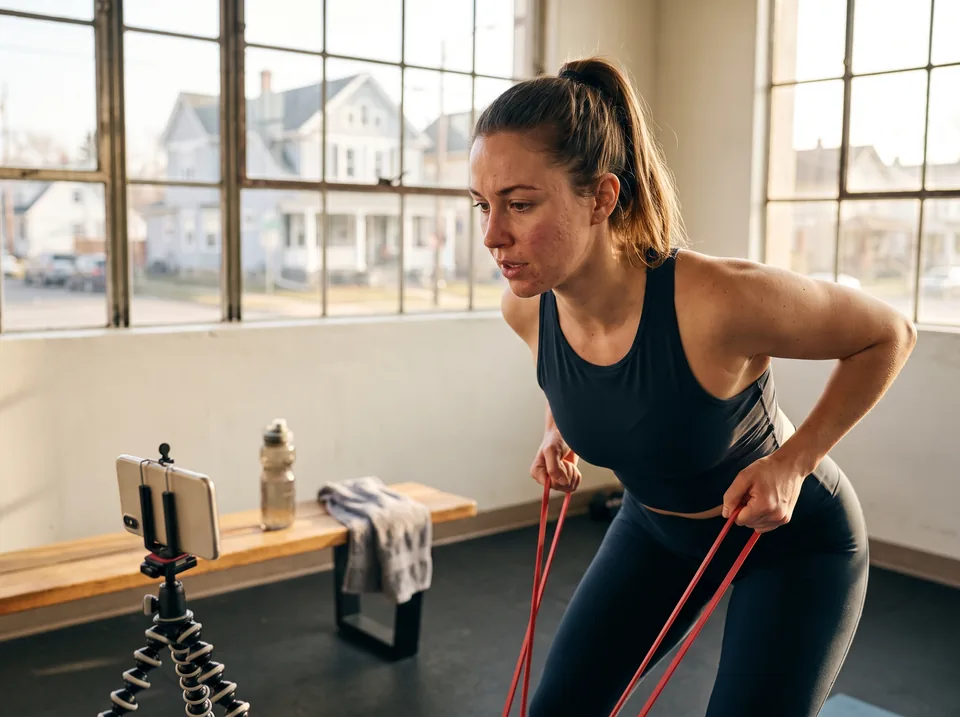
The posts that move a sound are everyday ones: a workout, a commute, a room makeover, a dance in the kitchen. A creator who films that kind of video every week and has an audience that sticks around is worth more to a release than a bigger account that only reposts music. The shortlist is built to find those creators, and the brief tells them which part of the song to use and lets them choose the idea.
You approve every creator you hire
FTC #ad disclosure in every brief
Why it works
What makes TikTok music promotion different from other creator campaigns
The sound is the product
In a normal sponsored post the creator talks about the product. In song promotion the creator rarely mentions the song at all. The track plays under a video that suits it, and success is measured in how many other people then use the sound, not in clicks on a link.
Payola rules do not cover TikTok, the FTC does
The federal payola law, 47 U.S.C. 317, is written for broadcast stations, and the FCC does not regulate social media. A paid song post on TikTok falls under the FTC Endorsement Guides instead, which require a clear disclosure whenever the creator was paid or given something of value.
Many small creators beat one big one
TikTok tests a sound with new viewers when many separate accounts use it. Twenty micro creators at a few hundred dollars each give the algorithm twenty different audiences to test, which is more signal than one large account posting once for the same money.
What it handles
Matched, verified and shortlisted in seconds
Describe your brand and niche, and the AI scans creators in the 1k to 100k band, checks each one for fake followers and real engagement, and ranks the strongest matches into a shortlist you brief, approve and pay, all in one place.
- Ranks US TikTok and Instagram creators on content fit and verified engagement, so accounts with bought followers or bought views drop off the shortlist
- Lets you see every creator by name, audience and past posts before you invite or pay anyone
- Carries the sound link, the moment of the song you want used, the content ideas and the disclosure wording in one brief
- Sends every video and caption back for your approval before it goes live, and keeps the approved version on file
- On Growth, pays each creator their agreed per-video fee in one place, so a twenty-creator round is one payment run instead of twenty invoices
Why MicroInfluencers
One marketplace that runs the whole campaign
Not a static creator database, not a managed agency with a markup, and not a DM spreadsheet. Match, vet, brief, track and pay in one place, tuned to the brand and audience you already sell to.
Matches every brief in seconds
Describe your brand, niche and platforms, and the AI returns a ranked shortlist of micro and nano creators in the 1k to 100k band, scored on audience fit and real engagement, so you skip days of hashtag scrolling and cold DMs.
Verifies every creator
Every creator is fake-follower-checked and engagement-verified before they reach your shortlist, with an Authentic badge and a real engagement rate on every card, so you never pay a bot to talk to bots.
Briefs, tracks and pays
Approve the creators you want and the platform handles the rest, with FTC #ad disclosure built into every brief, performance tracked per post, and payment released to the creator from the same dashboard. You approve every hire.
Honest comparison
The ways to pay for TikTok music promotion, and what each one buys
Every route below puts money behind a song on TikTok. They differ in who picks the creators, whether you can see them first, how the price is set and whether the post ends up disclosed. Figures are the ones named in the sources listed under the table.
| Route | How the price is set | Who picks the creators | Watch out for |
|---|---|---|---|
| Promote or TikTok ads on your own video | You set a budget and TikTok sells views, follows or clicks | Nobody, the ad runs from your account | Paid reach on your own video, not other people using the sound |
| Music promotion service or package | A fixed package price for a stated number of creator posts | The service, often from its own network | Ask for creator names, audience country and engagement before paying |
| Clipping or pay-per-view campaign | Per thousand views, one example reported was $2 per 1,000 views | Anyone who joins the campaign and posts | Each clip is still a paid post that needs a disclosure |
| Hiring creators directly by DM | Per video, roughly $150 to $400 at about 80,000 followers and $300 to $600 at over a million, per creators quoted by NPR | You, one message at a time | No vetting, no approval step, and payment and paperwork are on you |
| Undisclosed paid posts | Whatever the creator and label agree privately | The label or manager | A material connection the FTC Endorsement Guides say must be disclosed |
| MicroInfluencers | $49, $149 or $399 a month published, plus each creator's agreed per-video fee and a small marketplace fee | You, from a ranked and engagement-verified shortlist | Starter covers up to 10 creators per campaign on TikTok and Instagram; payments, YouTube and up to 50 creators from Growth |
Sources: NPR, "Music influencers are getting paid to promote songs, and they're not telling you" (13 July 2026), for the creator rates and the $2 per 1,000 views clipping example; 47 U.S.C. 317 at Cornell LII for the broadcast sponsorship rule; FTC Endorsement Guides, 16 CFR 255.5, read at eCFR, for the material connection disclosure rule; TikTok's Commercial Music Library help page (ads.tiktok.com) for commercial music use. Read 25 October 2026. Our influencer marketing cost guide has rates for other niches.
The playbook
How to run a TikTok song promotion campaign that holds up
Six steps, in order. A first round of ten to twenty micro creators over two to three weeks around a release date is enough to see whether the sound gets picked up beyond the paid posts.
Get the track live and cleared on TikTok first
Make sure the song is in TikTok's library through your distributor or label before you brief anyone, and get the exact sound link. TikTok tells businesses to use its Commercial Music Library for branded content and ads, and labels and distributors can opt in tracks whose rights they fully control, so ask yours to confirm the track is cleared for sponsored posts in writing.
Pick the fifteen seconds that carry the song
Most videos use a short hook, not the whole track. Choose the part of the song you want heard, usually the chorus or the line people will repeat, and put the timestamp in the brief so every creator uses the same moment and the sound page builds in one place.
Choose creators by content, not by music niche
A creator who posts dance, outfit, fitness, travel or comedy videos to a loyal audience usually moves a sound further than a music review account. Check that most of the audience is in the country you are releasing to and that comments come from real people, then invite more creators than you need.
Brief the mood and let the creator choose the idea
Describe the feeling of the song and give two or three example formats, then let creators pick what suits their channel. Forced choreography from a brief looks like an ad and gets skipped. Ask them to keep the sound attached and not to replace it with a voiceover.
Disclose every paid post
Ask creators to switch on TikTok's content disclosure setting for paid partnerships and to say it plainly, for example "#ad" with a short note that you paid for the post. The FTC Endorsement Guides apply to a song just as they apply to a pair of headphones. Approve each video before it goes live.
Measure sound use, not views
Track how many videos use the sound beyond the ones you paid for, saves and streams on the platforms you care about in the following two weeks. If the organic count keeps rising after the paid posts stop, fund a second round with the creators whose videos started it, and consider running the best one as a Spark Ad.
The expensive mistake in music promotion is not a flat video. It is paying a package for views from accounts you never saw, or a run of undisclosed posts that becomes the story when the song charts. Name the creators, disclose the posts and keep the approvals.
People also ask
What artists and labels ask before paying for TikTok music promotion
Does TikTok music promotion work?
It can, when real creators with engaged audiences use the sound in videos that suit it. Paid posts give the algorithm early signal, and the campaign works if other people then use the sound on their own. It fails when the views come from bought accounts or when the song never fits the videos, which no budget fixes.
How much does TikTok music promotion cost?
Micro creators usually charge about $150 to $600 per video, with creators around 80,000 followers quoted at $150 to $400 and accounts over a million at $300 to $600 by NPR in July 2026. A first round of ten to twenty creators therefore costs roughly $2,000 to $8,000, plus a platform or service fee. On MicroInfluencers that is $49 a month on Starter for up to 10 creators, or $149 on Growth with in-platform payments and up to 50.
Can you pay TikTok influencers to use your song?
Yes. Paying a creator to use your song in a video is legal in the US, and it is how most TikTok music promotion works. The post has to disclose that it was paid, because the FTC treats the payment as a material connection, and the track should be cleared for commercial use on TikTok. Agree the fee and the deliverable in writing before the video goes live.
Is paying influencers to promote a song payola?
Not in the legal sense. The federal payola law, 47 U.S.C. 317, covers broadcast stations, and the FCC does not regulate TikTok or other social media. Paid song posts on social media fall under the FTC Endorsement Guides instead, which require the creator to disclose the payment. Undisclosed paid posts are the problem, not the payment itself.
Do influencers have to disclose paid song promotions?
Yes. Under the FTC Endorsement Guides, 16 CFR 255.5, a payment or free gift that the audience would not expect has to be disclosed clearly and conspicuously, and the FTC makes no exception for music. On TikTok that means switching on the paid partnership disclosure setting and saying it in the video or caption, not hiding a tag among hashtags.
What is the best TikTok music promotion service?
The best one shows you the creators before you pay, proves their audience is real and in your target country, and gets each post disclosed and approved. Package services that will not name their creators are the riskiest buy. If you want to choose and pay creators yourself, a creator marketplace such as ours starts at $49 a month plus the creator fees.
How do I promote my song on TikTok as an independent artist?
Post your own videos with the sound first, then pay a small group of creators whose audience matches your listeners to use it in their usual content. Ten micro creators at a few hundred dollars each is a realistic first round. Brief the mood, not a dance, disclose every paid post, and fund more of whatever starts people using the sound.
Is TikTok promotion worth it for musicians?
It is worth it when the song has a hook that fits everyday videos and you can afford a round of real creators, roughly $2,000 or more. Boosting your own post with TikTok Promote buys views but rarely gets other people using the sound. Spend on creators whose audiences engage, then judge the campaign on sound use and streams, not views.
Good questions
Questions about artists, labels and music marketers
Explore more
More ways brands find and hire micro-influencers
TikTok micro influencers
Match with TikTok micro-creators whose videos actually get watched and shared.
Learn moreVet influencers for fake followers
Vet influencers for fake followers so every creator you hire is real.
Learn moreTikTok influencer marketing
Match your brand to vetted TikTok micro-creators, agree rates, brief, track and pay in one place.
Learn moreStop scrolling hashtags and cold-DMing creators. Put matching on autopilot.
Describe your brand and audience and the AI returns a ranked shortlist of verified micro-influencers in seconds. You approve the creators you want, then brief, track and pay them in one place, with FTC #ad disclosure built into every brief.
Engagement-verified creators · no fake followers · FTC disclosure in every brief