By vertical · Pet brands
Pet influencer marketing for pet brands, hire US pet influencers without a pet influencer agency
The short answer
Pet influencer marketing works when the creator's followers own the same kind of animal you sell for, the post shows the pet genuinely using the product, and every health claim is one your brand can back up. For pet food, treats, supplements, toys and accessories, micro creators with 10,000 to 100,000 US followers usually deliver that for a gifted product or a few hundred dollars a post, far below a celebrity pet account. MicroInfluencers matches pet brands to engagement-verified US micro and nano creators and runs the brief, approval and payment in one place, from $49 a month.
Match · verify · rank · you approve
Sample shortlist Sample shortlist · profiles
Engagement-verifiedType a brand above and a sample shortlist builds here, laid out exactly as your shortlist inside the product: handle, niche, engagement rate and an authenticity check on every creator.
Preview only. The profiles below are illustrative examples, not real creator accounts.
Interactive preview · illustrative profiles, not real accounts · no signup needed
Illustrative profiles, not real creator accounts. Inside the product every creator is fake-follower-checked and engagement-verified, with #ad disclosure built into every brief.
Pet content gets more reach than almost any other category, and that is exactly the trap. The famous pet accounts built their audiences on funny videos, and a large share of the people watching do not own a dog or a cat at all. They follow for the laugh. Pay one of those accounts to post about a $40 bag of grain-free kibble and you get a lot of views and very few orders.
The creators who sell pet products are usually smaller and more specific: the owner of two rescue greyhounds who posts every walk, the cat account whose comments are full of litter and hairball questions, the dog trainer whose followers are working through reactivity with their own puppy. Their audience is other owners of the same animal, and those owners are buying food, treats and gear every month. US pet spending reached $158 billion in 2025 by the American Pet Products Association's count, across 95 million pet-owning households, and most of it is repeat purchase. One creator who converts a follower to your food can be worth that follower's next two years of orders.
Pet also carries a compliance risk that surprises brands. The moment a creator says your chew "cures" itchy skin or your supplement "fixes" joint pain, the post is making a disease claim about an animal product, and FDA and the FTC both have a view on that. A pet program needs creators vetted for a real owner audience and a brief that tells them exactly which claims are allowed. MicroInfluencers is built to do both on a published monthly price, which is usually a fraction of a pet influencer agency retainer.
What you are buying
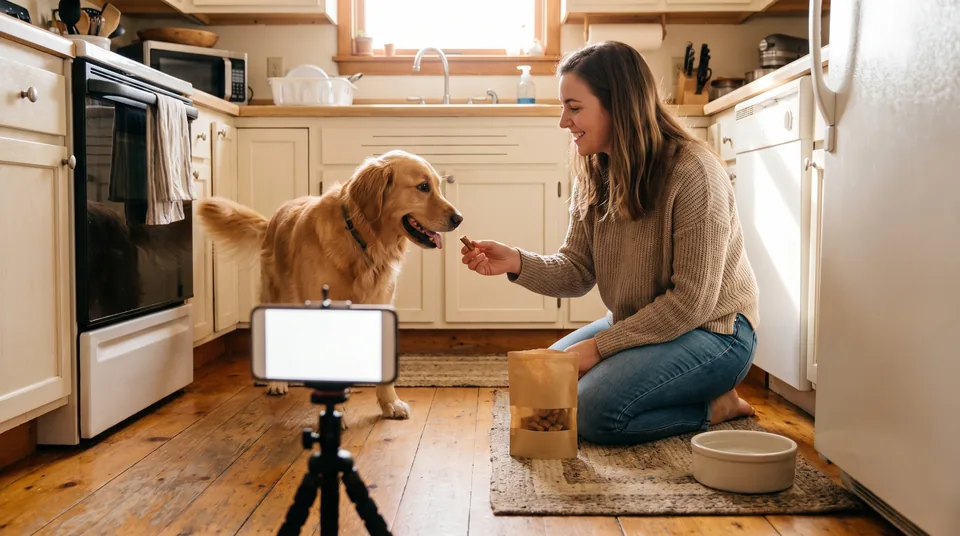
The dog actually eating it, on camera
Pet posts that sell show the animal using the product in a real home: the treat taken on the first sniff, the harness on a morning walk, the cat ignoring the old litter for the new one. Brief for that moment and a creator with 20,000 dog-owner followers will outsell a novelty account with ten times the reach.
You approve every creator you hire
FTC #ad disclosure in every brief
Why it works
What makes pet influencer marketing different from every other category
Owner audience beats viral audience
A creator whose comments ask about food brands, allergies and leash training has an audience of owners with a monthly pet budget. A creator whose comments are laughing emoji has an audience that likes animals. Rank on species match and comment quality first, and on follower count last.
The species has to match
Cat owners do not buy dog chews, and a toy-breed audience does not buy a harness sized for a Labrador. Match the animal, the size and the life stage (puppy, adult, senior) to your product before you look at reach. It is the cheapest filter in the category and the one agencies skip most.
Health words are regulated words
"Supports joints" and "cures arthritis" are very different claims. FDA's Compliance Policy Guide Sec. 690.150 covers dog and cat foods marketed to treat or prevent disease, and the FTC holds the brand responsible for what a paid creator says. The brief sets the wording, not the creator.
What it handles
Matched, verified and shortlisted in seconds
Describe your brand and niche, and the AI scans creators in the 1k to 100k band, checks each one for fake followers and real engagement, and ranks the strongest matches into a shortlist you brief, approve and pay, all in one place.
- Ranks US pet creators on niche, audience fit and verified engagement, so novelty accounts with non-owner audiences drop off the shortlist
- Screens fake followers and engagement pods, which are common on large animal accounts
- Keeps the claims list, the brief, the content approval and the creator payment in one place
- Writes FTC disclosure into every brief by default, including for gifted food and product seeding
- Runs a seeding round of 20 dog or cat creators in the same workflow as one paid collaboration
- Publishes its prices: $49, $149 or $399 a month, month to month
Why MicroInfluencers
One marketplace that runs the whole campaign
Not a static creator database, not a managed agency with a markup, and not a DM spreadsheet. Match, vet, brief, track and pay in one place, tuned to the brand and audience you already sell to.
Matches every brief in seconds
Describe your brand, niche and platforms, and the AI returns a ranked shortlist of micro and nano creators in the 1k to 100k band, scored on audience fit and real engagement, so you skip days of hashtag scrolling and cold DMs.
Verifies every creator
Every creator is fake-follower-checked and engagement-verified before they reach your shortlist, with an Authentic badge and a real engagement rate on every card, so you never pay a bot to talk to bots.
Briefs, tracks and pays
Approve the creators you want and the platform handles the rest, with FTC #ad disclosure built into every brief, performance tracked per post, and payment released to the creator from the same dashboard. You approve every hire.
Honest comparison
Five kinds of pet product, and what the creator post has to prove
A treat, a supplement and a harness are sold by different creators with different content. Find your product row first, then brief to the proof point in the third column.
| Pet product | The account that sells it | What the content has to show | The line creators must not cross | Count results by |
|---|---|---|---|---|
| Food and fresh or frozen meals | An owner of the same species and size who posts daily routines and talks about what their pet eats. | The switch: two to four weeks on the food, the transition, and the pet eating it willingly on camera. | No disease claims such as "cleared up his allergies" or "cured her kidney problems". | First orders and subscription starts on a creator code, then repeat orders at 60 days. |
| Treats and chews | A trainer or an owner who films training sessions and walks, where treats are used naturally. | The treat used as a reward in a real training moment, plus the texture and size in hand. | No dental or digestive health promises unless your brand holds the evidence. | Orders by code, and add-to-cart on the treat page from the creator's link. |
| Supplements and calming products | An owner of an older or anxious pet whose followers share the same problem. | Weeks of honest use, what changed in the owner's own words, and a reminder to ask a vet. | Highest risk. Nothing about treating arthritis, anxiety disorders or any disease. | Orders and subscription starts by code, repeat purchase at 60 and 90 days. |
| Toys, beds, harnesses and accessories | A creator whose pet matches the product size, breed type or energy level. | Durability and fit: the toy after two weeks of chewing, the harness on a pulling dog, the bed in use. | Low, unless the product claims safety or injury prevention. | Orders, return rate and size exchanges by code. |
| Local pet services (grooming, daycare, training) | A local owner whose followers live in your metro and who can visit on camera. | The visit itself: drop-off, the groom or session, and the pet happy at pick-up. | No promises about behavior outcomes you cannot guarantee. | Bookings on a creator-specific offer code or landing link. |
One rule saves money in every row: never ship a case of food or a large bed to a creator you have not vetted. Check the species, the audience location, the comment quality and past sponsored posts first, then send the product.
The playbook
How to run pet influencer marketing that sells food, treats and gear
Six steps, in order. Most pet brands can run a first round with ten to fifteen micro and nano creators around one product and one offer.
Pick one product, one animal and one number
Decide what a win looks like before you open a single profile: first orders for a food, add-to-carts for a new toy, subscription starts for a supplement. Then pick one product and one species for the round. A campaign that asks dog and cat creators to post about the whole catalog cannot be measured and is hard to repeat.
Match the species, size and life stage
A senior-dog joint supplement needs creators with older dogs, a kitten food needs kitten owners, an XL harness needs big-dog accounts. Write the animal, the size and the life stage into the brief and ask shortlisted creators for their top audience countries. For a US brand shipping only in the US, an audience that lives abroad is money spent on views you cannot sell to.
Write the claims list before the brief
List what creators may say and what they may not, in plain words. "She finished the bowl and asked for more" is an honest experience. "This food fixed his skin allergy" is a disease claim about an animal product. Under the FTC's Endorsement Guides the brand is responsible for claims its endorsers make, so the list protects you and the creator, and it saves a round of edits.
Give the pet time with the product
Ship food and supplements two to four weeks before the first post, because owners want to see a real transition, not a first bite. Toys and accessories need at least a week of use. Budget for a follow-up post, since "one month on the new food" usually sells better than the unboxing.
Require the disclosure and approve before it posts
Free food, a gifted bed and a paid post are all material connections, so the creator has to disclose clearly, such as #ad or the platform's paid-partnership label, at the start of the caption and said out loud in video. Approve each post before it goes live so claims, prices and the offer are correct, and so no pet is filmed doing anything unsafe for the shot.
Count orders by code, then rebook the winners
Give every creator a unique code or link and read results against the number you set in step one. For food and supplements, wait for the second order, since a pet that refuses a food after week three shows up in repeat purchase, not in first orders. Rebook the creators whose codes converted and kept customers, and after two or three rounds you have a roster that works like an ambassador program.
The costliest mistake in pet influencer marketing is booking an account because its videos went viral. Viral pet content is watched by people who do not own that animal, and a food or supplement brand pays for every one of those views. Pay for owners, not for laughs.
People also ask
What pet brands ask before hiring pet influencers
How much does pet influencer marketing cost?
Pet influencer marketing costs a gifted product for most nano creators, a few hundred dollars a post for most micro creators, and thousands for the famous pet accounts, plus the software or agency you run it through. The full total also includes the product you ship, usage rights if you run the video as an ad, and repeat shipments of food. MicroInfluencers publishes its software price: $49, $149 or $399 a month. Our influencer marketing cost breakdown covers creator rates by size.
How much do pet influencers charge?
Pet influencers charge by audience size, format and usage rights, much like any creator. Nano accounts under 10,000 followers often post for free product plus a small fee, micro accounts with 10,000 to 100,000 usually charge from about $100 to several hundred dollars a post or video, and celebrity pets quote case by case. Paid usage rights for ads cost extra. Our nano influencer rates page compares published rate guides.
What is a pet influencer agency?
A pet influencer agency is a firm that either represents famous animal accounts for brand deals or runs pet influencer campaigns for brands on a retainer. The first kind sells access to its roster, the second sells managed service. Both usually quote per campaign rather than publishing prices. A brand hiring micro creators and running code-tracked seeding rounds can often do the same work with software for a flat monthly fee and keep the creator relationships.
Do I need a pet influencer marketing agency?
You need an agency if you want celebrity pet accounts, managed shoots, or nobody on your team can spend a few hours a week on creators. If your program is micro and nano dog and cat creators, gifting and code tracking, software does the sourcing and vetting for a fraction of a retainer. Our agency vs platform comparison covers the tradeoff.
How do I find pet influencers for my brand?
Start with your own customers, because owners already posting about your product are the most credible hires you will make. Beyond that, search by species and breed rather than by the pet hashtags, rank creators on audience location, comment quality and past sponsored posts, and ask for audience screenshots before shipping anything. A platform that verifies engagement filters out bought-follower accounts, which are common on big animal pages.
Is pet influencer marketing worth it?
Yes, for pet brands with a repeat-purchase product and creators matched on species. A creator whose followers own the same animal can turn one post into customers who reorder food or treats every month, which makes the lifetime value far higher than the first order. It is rarely worth it when a brand pays a viral account for reach, because much of that audience owns no pet.
What can a pet influencer legally say about my product?
A pet influencer can describe their own honest experience with the product and any claim your brand can already substantiate, and nothing beyond that. Disease language is the danger zone: FDA's Compliance Policy Guide Sec. 690.150 covers dog and cat foods marketed to diagnose, cure, mitigate, treat or prevent disease, and the FTC holds the brand responsible for its endorsers' claims. Put a written claims list in the brief.
Do pet influencers have to disclose gifted products?
Yes. Under the FTC's Endorsement Guides a free bag of food, a gifted toy or a comped grooming visit is a material connection, just like cash, so the post needs a clear disclosure such as #ad or the platform's paid-partnership label. It applies even when the account is written in the pet's voice. Our FTC disclosure guide covers the exact wording.
Can I sell pet products on Amazon with influencers?
Yes. Pet is a strong Amazon category, and a creator who links to your listing with a tagged link sends external traffic you can measure in Amazon Attribution. Brands enrolled in Brand Registry can also earn the Brand Referral Bonus on that traffic. Our Amazon influencer marketing page covers the setup for Amazon sellers.
Good questions
Questions about pet brands
Explore more
More ways brands find and hire micro-influencers
Shopify influencer marketing
Find and hire vetted micro-creators for your Shopify store, from first gifted post to paid, tracked campaigns.
Learn moreProduct seeding and influencer gifting platform
Match your brand to engagement-verified micro-creators, send product with FTC disclosure built in, and track who posts.
Learn moreAmazon influencer marketing for sellers
Hire engagement-verified micro-creators to send tagged external traffic to your Amazon listings, and keep the Brand Referral Bonus that comes with it.
Learn moreStop scrolling hashtags and cold-DMing creators. Put matching on autopilot.
Describe your brand and audience and the AI returns a ranked shortlist of verified micro-influencers in seconds. You approve the creators you want, then brief, track and pay them in one place, with FTC #ad disclosure built into every brief.
Engagement-verified creators · no fake followers · FTC disclosure in every brief