By vertical · Wine, beer and spirits brands
Alcohol influencers and alcohol influencer marketing for wine, beer and spirits brands that need a 21+ audience
The short answer
Alcohol influencer marketing in the US works when the creator is of legal drinking age and looks it, at least 73.8% of the audience is 21 or older, and every post is disclosed as paid. That 73.8% figure is the Distilled Spirits Council's Code standard, and the Code names influencers acting for a brand as covered placements. Meta requires alcohol branded content to be age-gated to 21+ in the US, and TikTok restricts it to 21+ US audiences. MicroInfluencers matches wine, beer and spirits brands with engagement-verified US micro creators and keeps the brief, approval and payment in one place, from $49 a month.
Match · verify · rank · you approve
Sample shortlist Sample shortlist · profiles
Engagement-verifiedType a brand above and a sample shortlist builds here, laid out exactly as your shortlist inside the product: handle, niche, engagement rate and an authenticity check on every creator.
Preview only. The profiles below are illustrative examples, not real creator accounts.
Interactive preview · illustrative profiles, not real accounts · no signup needed
Illustrative profiles, not real creator accounts. Inside the product every creator is fake-follower-checked and engagement-verified, with #ad disclosure built into every brief.
Alcohol is the one consumer category where picking the creator is a compliance decision before it is a creative one. A lifestyle account with 400,000 followers and a big college audience can post a great-looking cocktail video and still put your brand outside its own industry code, because most of the people watching are under 21. The fee was the cheap part of that mistake.
The rules come from three places at once. The Distilled Spirits Council of the United States publishes a Code of Responsible Practices, last updated July 2025, which says digital marketing, explicitly including "influencers acting on behalf of a brand advertiser", should run only where at least 73.8 percent of the audience is reasonably expected to be of legal purchase age. The platforms add their own layer: Meta's branded content policy requires alcohol posts to be age-gated to 21 or older in the United States, and TikTok's Branded Content Policy, effective 31 August 2026, restricts alcohol branded content to audiences aged 21 and older in the US and to the market where it was posted. Then the FTC expects every paid or gifted post to be disclosed.
That is why the alcohol programs that work tend to run on smaller creators. A bartender with 15,000 followers who films a weeknight cocktail at home, a certified sommelier who explains what to pour with Thanksgiving dinner, or a homebrewer who reviews every new IPA at the local taproom has an audience made of adults who already buy the category. Their comments ask where to get the bottle, not which filter they used.
MicroInfluencers is built for the part you control. Describe the bottle, the buyer and the states you sell in, and the AI returns a ranked shortlist of US creators in the 1k to 100k band whose niche fits, each one fake-follower-checked and engagement-verified. You ask each creator for their audience age breakdown before you sign, brief them with the approved wording and the disclosure rules, approve every post before it goes live, and pay them in one place, from a published price of $49 a month.
What you are buying
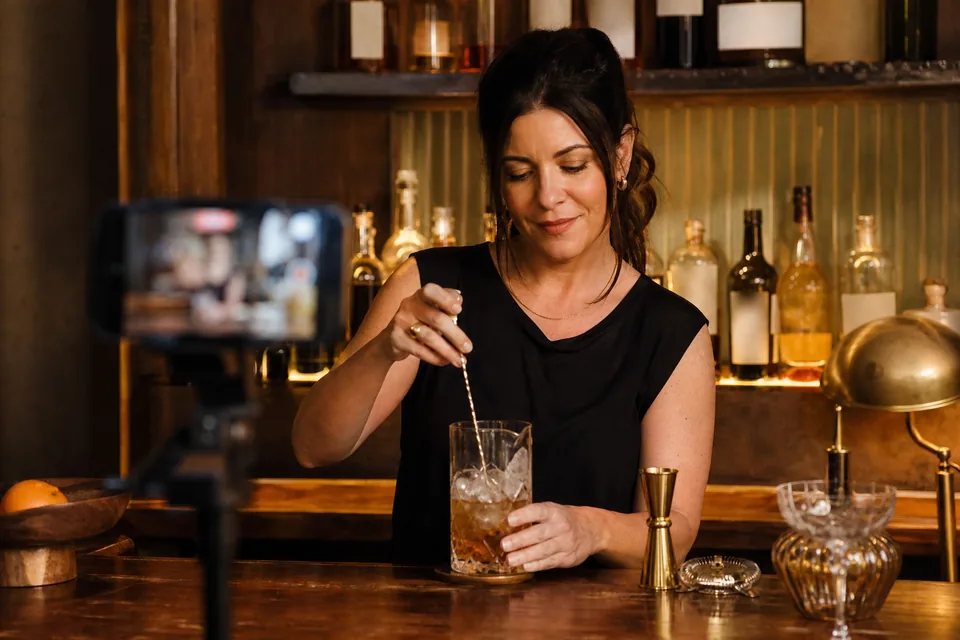
A trade creator making a real drink for adults
The alcohol posts that sell come from bartenders, sommeliers and home cocktail makers filming a real serve for an audience that is already of age and already buys the category. Brief for the occasion and the pour, set the 21+ gate, and a creator with 15,000 followers who mixes drinks for a living will move more bottles than a party account ten times the size.
You approve every creator you hire
FTC #ad disclosure in every brief
Why it works
What makes alcohol influencer marketing different
The audience is the compliance test
Under the spirits industry code a creator's account is a media placement like any other, so it needs an audience at least 73.8% of legal purchase age. Ask for the age breakdown from the creator's own analytics before you sign, not after the post is live.
Every platform gates alcohol at 21 in the US
Meta requires alcohol branded content to be age-gated to 21+ in the United States, and TikTok restricts it to US audiences aged 21 and older. Build the age gate into the brief so the creator sets it before publishing.
Trade creators beat party accounts
Bartenders, sommeliers, brewers and home cocktail makers have older, buying audiences and already know what responsible drinking content looks like. Party and nightlife accounts reach younger viewers and carry the most risk.
What it handles
Matched, verified and shortlisted in seconds
Describe your brand and niche, and the AI scans creators in the 1k to 100k band, checks each one for fake followers and real engagement, and ranks the strongest matches into a shortlist you brief, approve and pay, all in one place.
- Ranks US creators on niche fit and verified engagement, so accounts with bought followers drop off an alcohol shortlist
- Finds bartenders, sommeliers, brewers and home cocktail creators in the 1k to 100k band, where audiences skew to adults who buy the category
- Keeps the approved wording, the do-not-show list, content approval and every payment in one place
- Writes FTC disclosure and the 21+ age gate into every brief by default, including for gifted bottles
- Gives each creator a unique link or code so online orders and store locator clicks are counted per creator
Why MicroInfluencers
One marketplace that runs the whole campaign
Not a static creator database, not a managed agency with a markup, and not a DM spreadsheet. Match, vet, brief, track and pay in one place, tuned to the brand and audience you already sell to.
Matches every brief in seconds
Describe your brand, niche and platforms, and the AI returns a ranked shortlist of micro and nano creators in the 1k to 100k band, scored on audience fit and real engagement, so you skip days of hashtag scrolling and cold DMs.
Verifies every creator
Every creator is fake-follower-checked and engagement-verified before they reach your shortlist, with an Authentic badge and a real engagement rate on every card, so you never pay a bot to talk to bots.
Briefs, tracks and pays
Approve the creators you want and the platform handles the rest, with FTC #ad disclosure built into every brief, performance tracked per post, and payment released to the creator from the same dashboard. You approve every hire.
Honest comparison
Where alcohol creator content can run in the US, platform by platform
Read the rules for your platform before you shortlist anyone. The Meta and TikTok columns quote each platform's own branded content policy, and the code column quotes the Distilled Spirits Council Code (July 2025), all checked at source in October 2026.
| Platform | Branded content rule for alcohol in the US | Audience check before you sign | Creators who fit | Watch out for |
|---|---|---|---|---|
| Instagram and Facebook | Allowed. Must follow local law and industry codes, and be age-gated to 21 or older in the United States. | Instagram Insights age brackets. The 18 to 24 bracket straddles 21, so count it as under age unless the creator can show otherwise. | Bartenders, sommeliers, home cocktail and food creators | Reels reach far past the follower base. Set the age gate on the account or post before publishing. |
| TikTok | Restricted. Age-restricted to audiences aged 21 and older in the US and to the market where it was posted. | TikTok Analytics viewer age. Same 18 to 24 bracket problem. | Creators whose analytics show a clearly adult audience, often older food and home bar accounts | TikTok's rule also covers alcohol-free alternatives, mixers presented as mixers for alcohol and alcohol-sponsored events. |
| YouTube | Paid placements must be declared with YouTube's paid promotion setting, plus your code and state law. | YouTube Studio viewer age breakdown | Spirits reviewers, wine educators, homebrewers, long-form tasting channels | Long videos keep working for years, so agree usage rights and takedown terms in the contract. |
| Any platform, under the spirits code | Influencers acting for a brand count as placements. At least 73.8% of the audience should be of legal purchase age, or delivery directed to 21+ adults using first, second or third party data. | The creator's own analytics, kept on file with the contract | Creators who are 21+ and reasonably appear 21 or older | Models and actors in your ads should be at least 25. Recognizable influencers are exempt from the 25 rule but must still appear 21+. |
| MicroInfluencers | Matches creators on Instagram, TikTok and YouTube. You choose the platform and set the age gate in the brief. | Engagement-verified. Audience age is requested from each creator before you sign. | Engagement-verified US creators from 1k to 100k, including bartenders, sommeliers and homebrewers | $49, $149 or $399 a month published, plus each creator's agreed fee |
Sources: Distilled Spirits Council Code of Responsible Practices for Beverage Alcohol Advertising and Marketing (last update July 2025), Meta Branded Content Policies at facebook.com/business/help, and TikTok Branded Content Policy at tiktok.com/legal (effective 31 August 2026), read October 2026. The Beer Institute and Wine Institute publish their own advertising codes, so check the one for your category too. Food and drink brands outside alcohol should read our food and beverage influencer marketing page.
The playbook
How to run an alcohol influencer campaign your compliance team will sign off
Six steps, in order. A first round with eight to twelve micro creators in the states you actually sell in is enough to learn which audiences buy.
Start from the states you can sell in
Alcohol distribution is state by state. Shortlist creators whose audience lives where your bottle is on the shelf or where you can legally ship, otherwise the post sends people to a store locator with nothing in it. Local creators near your distributor's accounts often outperform national ones.
Get the audience age breakdown in writing
Ask each creator for a screenshot of their audience age from Instagram Insights, TikTok Analytics or YouTube Studio. The platforms bucket 18 to 24 together, so the safe reading is that the 25-and-over share alone should reach 73.8%, or the creator must use the platform's 21+ age gate. Keep the screenshot with the contract.
Check the creator, not just the audience
The creator must be of legal drinking age and reasonably appear 21 or older. Anyone you cast as a model or actor in the content should be at least 25 under the spirits code. Skip accounts whose content leans on college parties, drinking games or heavy consumption.
Write the do-not-show list into the brief
No drinking while driving, swimming or doing anything risky, no implied link between alcohol and social or sexual success, no rapid or excessive drinking, no content aimed at under-21s and a responsible drinking line in every post. Give creators the approved product claims word for word, including ABV and tasting notes.
Sort out product, payment and retailer ties
Shipping alcohol to a creator's home is regulated by each state, so many brands have creators buy the bottle locally and reimburse it in the fee. If a creator works for or owns a licensed bar, restaurant or store, paying them can raise tied-house questions under federal and state law, so have counsel review those deals first.
Disclose, approve, then track per creator
A fee or a free bottle is a material connection, so the creator uses the platform's paid partnership label and says it in the caption or out loud. Approve every draft against the brief, set the 21+ gate, and give each creator a unique link to your store locator or online partner so you can see whose audience actually bought.
The most expensive mistake in alcohol influencer marketing is hiring for reach and checking the audience later. Check the age breakdown first, then the engagement, then the creative.
People also ask
What wine, beer and spirits brands ask before hiring alcohol influencers
Can alcohol brands use influencers?
Yes. US wine, beer and spirits brands can pay or gift creators, but the post has to meet the industry code and the platform's rules. The creator must be of legal drinking age, the audience should be at least 73.8% of legal purchase age under the spirits code, the post must be age-gated to 21+ on Meta and TikTok, and the paid relationship must be disclosed.
What is the 73.8% rule for alcohol advertising?
The 73.8% rule is the placement standard in the Distilled Spirits Council's Code of Responsible Practices. Alcohol ads, including digital placements and influencers acting for a brand, should run only where at least 73.8% of the audience is reasonably expected to be 21 or older. The Code also allows delivery directed to 21+ adults using first, second or third party data.
How old do influencers have to be to promote alcohol?
In the US an influencer promoting alcohol must be at least 21 and should reasonably appear to be 21 or older. Under the spirits code, models and actors in alcohol advertising should be at least 25, with proof of age. Recognizable influencers of legal age are exempt from the 25 rule, but most brands still prefer creators who are clearly over 25.
Can you promote alcohol on TikTok?
Yes, with limits. TikTok's Branded Content Policy, effective 31 August 2026, lists alcohol as a restricted industry: in the US, alcohol branded content is shown only to audiences aged 21 and older and only in the market where it was posted. The rule also covers alcohol-free alternatives, mixers presented as mixers for alcohol and alcohol-sponsored events.
Can influencers promote alcohol on Instagram?
Yes. Meta's branded content policy allows alcohol posts that follow local law and industry codes, and requires them to be age-gated to 21 or older in the United States. The creator should tag your brand with the paid partnership label and set the age restriction before publishing, so under-21 users cannot see the post.
How much do alcohol influencers charge?
Alcohol creators price like other food and drink creators of the same size, so US micro creators commonly quote from about $100 to $500 per post or short video, more with usage rights for ads. Trade creators such as certified sommeliers and well-known bartenders charge more. On MicroInfluencers the software is $49, $149 or $399 a month, plus each creator's agreed fee.
How do I find alcohol influencers?
Search by the drinking occasion your bottle fits, such as weeknight cocktails, wine pairing or craft beer reviews, rather than by the word alcohol. Shortlist creators in the states where you sell, ask for their audience age breakdown, then check engagement for bought followers. MicroInfluencers returns a ranked, engagement-verified shortlist of US creators from a description of your product.
Do alcohol influencers need to disclose sponsorships?
Yes. Under the FTC Endorsement Guides any fee, free bottle, event invite or other material connection has to be disclosed clearly in the post, using the platform's paid partnership label plus a plain statement in the caption or video. The brand is responsible for making sure the creator does it, so put it in the contract.
Can I send free alcohol to influencers?
Sometimes. Shipping alcohol to a consumer is regulated by each state, and the rules differ for wine, beer and spirits, so a gifted bottle may not be legal to ship where the creator lives. Many brands have the creator buy the product locally and reimburse it. Either way the gift counts as a material connection and must be disclosed.
Good questions
Questions about wine, beer and spirits brands
Explore more
More ways brands find and hire micro-influencers
Influencer contract template
The clauses every brand-creator agreement needs, plus how MicroInfluencers builds FTC disclosure into every brief.
Learn moreInfluencer brief template
The eight sections every influencer brief needs, with sample wording you can copy.
Learn moreInfluencer Vetting
Check the audience before you pay for it: engagement quality, follower authenticity and brand safety, on every creator you shortlist.
Learn moreStop scrolling hashtags and cold-DMing creators. Put matching on autopilot.
Describe your brand and audience and the AI returns a ranked shortlist of verified micro-influencers in seconds. You approve the creators you want, then brief, track and pay them in one place, with FTC #ad disclosure built into every brief.
Engagement-verified creators · no fake followers · FTC disclosure in every brief