By vertical · SaaS and software companies
SaaS influencer marketing with SaaS influencers who turn walkthrough videos into trials and paid seats
The short answer
SaaS influencer marketing works when a creator who already teaches your buyer's workflow shows your product solving a real task on screen, then sends viewers to a trial or demo through a link that is theirs alone. Book micro creators on fit and engagement, pay a flat fee for the first video, add a recurring commission once a creator proves they convert, and judge each one on trials, activated accounts and paid seats, not views.
Match · verify · rank · you approve
Sample shortlist Sample shortlist · profiles
Engagement-verifiedType a brand above and a sample shortlist builds here, laid out exactly as your shortlist inside the product: handle, niche, engagement rate and an authenticity check on every creator.
Preview only. The profiles below are illustrative examples, not real creator accounts.
Interactive preview · illustrative profiles, not real accounts · no signup needed
Illustrative profiles, not real creator accounts. Inside the product every creator is fake-follower-checked and engagement-verified, with #ad disclosure built into every brief.
Most software companies try creators the same way once. Someone on the growth team finds a few tech channels with big numbers, pays for a sponsored segment, and the video gets a respectable view count and almost no trials. The conclusion in the next planning meeting is that influencer marketing does not work for SaaS.
What went wrong is usually the match, not the channel. A software purchase is a work decision, so the creator who moves it is the one whose audience does that work: the bookkeeper who films month-end close, the designer who records client handoffs, the operations lead who shares her automation setups. Those channels are small, often 5,000 to 60,000 subscribers, and their viewers watch a 12-minute walkthrough to the end because it is about their job. A 15-second mention on a general tech channel cannot compete with that.
Software also has a disclosure trap. Handing a creator a free annual account, a lifetime license or extra seats is compensation, even when no cash changes hands, and LinkedIn's own help center lists free products or services as value that requires its Brand Partnership label. The brief has to set the disclosure before anyone records.
MicroInfluencers is built for that kind of program. Describe the product, the buyer, the job it does and what the campaign has to prove, and the AI returns a ranked shortlist of US creators in the 1k to 100k band whose audience matches, each one fake-follower-checked and engagement-verified. You brief them with the workflow to show, the claims they can make and the disclosure, approve every video before it goes live, and pay each creator in one place. Published pricing starts at $49 a month, billed monthly, or half that billed yearly.
What you are buying
A real walkthrough of your product doing a real job
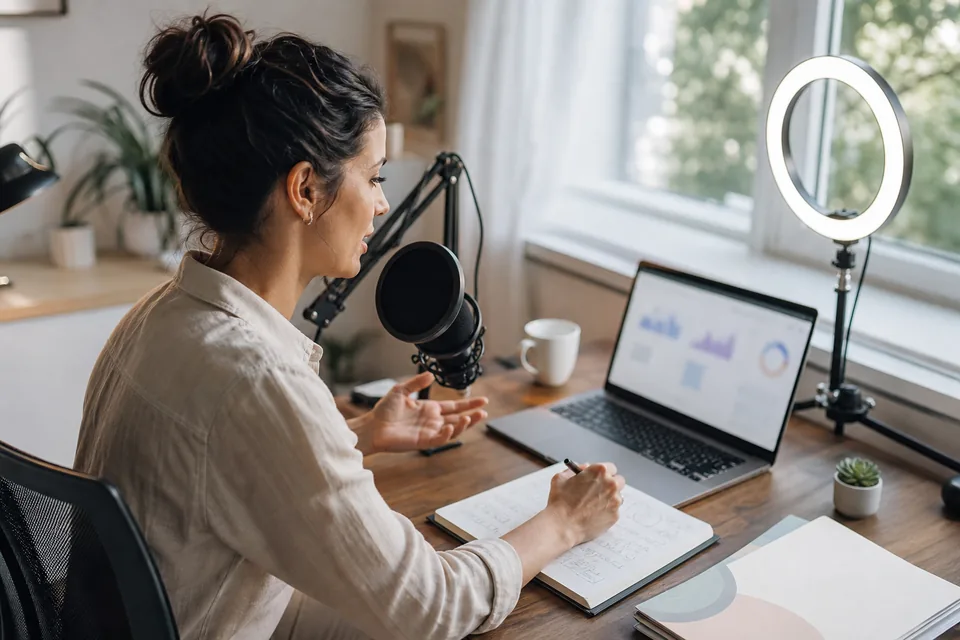
The SaaS videos that convert are tutorials first and ads second. The creator opens your product, runs the task their viewers struggle with, and shows the result on screen. Brief for the task, not the feature list, and a creator with 20,000 subscribers in your buyer's profession will send more trials than a channel ten times the size.
You approve every creator you hire
FTC #ad disclosure in every brief
Why it works
What makes SaaS influencer marketing different from consumer campaigns
The workflow is the audience
Rank creators on the job their viewers do, not on how techy the channel looks. A 9,000 subscriber channel about agency operations will out-convert a 400,000 subscriber gadget channel for project management software, because every viewer has the problem.
A trial is not a sale
Consumer brands count a checkout. Software counts a trial or demo first, then an activated account, then a paid seat weeks later. Track all three per creator, or you will rebook the channel that drives signups who never log in twice.
A free account is a paid relationship
A free plan upgrade, a lifetime deal or extra seats given for coverage is a material connection under the FTC Endorsement Guides. The creator discloses it in the video and in the post, even when there is no fee.
What it handles
Matched, verified and shortlisted in seconds
Describe your brand and niche, and the AI scans creators in the 1k to 100k band, checks each one for fake followers and real engagement, and ranks the strongest matches into a shortlist you brief, approve and pay, all in one place.
- Ranks creators on the workflow and buyer their audience matches, plus verified engagement, so general tech channels and bought followers drop off the shortlist
- Screens fake followers and engagement pods before you hand out a single free account
- Keeps the brief, the demo account details, the claims list, content approval and every payment in one place
- Writes FTC disclosure into every brief by default, including for free accounts and lifetime deals with no cash fee
- Gives each creator a unique UTM link or code so trials and paid seats are counted per creator in your own analytics
Why MicroInfluencers
One marketplace that runs the whole campaign
Not a static creator database, not a managed agency with a markup, and not a DM spreadsheet. Match, vet, brief, track and pay in one place, tuned to the brand and audience you already sell to.
Matches every brief in seconds
Describe your brand, niche and platforms, and the AI returns a ranked shortlist of micro and nano creators in the 1k to 100k band, scored on audience fit and real engagement, so you skip days of hashtag scrolling and cold DMs.
Verifies every creator
Every creator is fake-follower-checked and engagement-verified before they reach your shortlist, with an Authentic badge and a real engagement rate on every card, so you never pay a bot to talk to bots.
Briefs, tracks and pays
Approve the creators you want and the platform handles the rest, with FTC #ad disclosure built into every brief, performance tracked per post, and payment released to the creator from the same dashboard. You approve every hire.
Honest comparison
Five ways to pay SaaS creators and what each one tells you
These are the deal structures US software companies use with creators. Pick the one that matches what you need to learn, and expect to move a creator from one column to the next as they prove themselves.
| Deal structure | What you pay | What it measures well | Where it goes wrong | Best for |
|---|---|---|---|---|
| Flat fee sponsored video | An agreed fee per video or integration, set by the creator's format and audience. | Whether the creative and the creator's audience produce trials at all. | You carry all the risk, and one video is a single read. | A first deal with a creator you have not worked with. |
| Recurring affiliate commission | A percentage of the subscription revenue each referred customer pays, for a set number of months. | Real paid revenue per creator, which is the number finance trusts. | Most creators decline it as a first deal, and it needs clean tracking from trial to paid. | Creators who already proved they convert on a flat fee. |
| Free account or lifetime deal only | Your product, given free, with no cash fee. | Whether a creator uses the product enough to cover it unprompted. | Coverage is optional, timing is theirs, and the free account still has to be disclosed. | Nano creators and tools a creator will use daily anyway. |
| Pay per trial or demo booked | A fixed amount per qualified signup, defined in the contract. | Top of funnel volume per creator. | Rewards signups that never activate unless you define qualified carefully. | Self-serve products with a short trial and a clear activation event. |
| MicroInfluencers | From $49 a month published, plus each creator's agreed fee and a small marketplace fee on payouts. | Which matched micro creators send trials and paid seats, per unique link or code. | No LinkedIn or podcast matching, and no built-in affiliate payout engine. | Software companies that want to choose, brief and pay workflow creators without an agency retainer. |
The pattern that works for most SaaS teams is a ladder: a flat fee for the first video, a second paid video for the creators whose links produced activated trials, then a recurring commission for the two or three who keep converting.
The playbook
How to run a SaaS influencer campaign that produces paid seats
Six steps, in order. Most software companies can run a first round with eight to fifteen micro creators in one buyer profession.
Pick one buyer and one number
Choose a single profession or role for the round, such as bookkeepers, Shopify store owners or agency project managers, and set the target first. "150 trials with 40 activated accounts in 45 days" tells you which creators to rebook; "awareness" tells you nothing.
Match on workflow, then on engagement
Shortlist creators whose recent videos teach the task your product handles, then check that comments come from practitioners asking real questions. A channel where viewers ask about their own setup is worth more than one where they post emojis.
Give a working account and a task
Set up a real account with sample data, not a sales demo login, and ask the creator to complete one task their audience cares about on screen. Tell them which claims are facts, such as pricing, integrations and security certifications, and let the rest be their opinion.
Require the disclosure and approve before it posts
A fee, a free plan upgrade or a lifetime deal is a material connection. The creator says it out loud early in the video, uses the platform's paid partnership label, and repeats it in the description. Approve each cut for accuracy before it goes live.
Track trials, activation and seats per link
Give every creator a unique UTM link or code that carries through signup into your product analytics and billing. Count trials, accounts that reach your activation event and paid seats separately, and keep counting for 60 to 90 days, because software buyers often sign up weeks after watching.
Rebook the converters on better terms
Move creators whose links produced activated accounts onto a second video or a recurring commission, and drop the ones who drove signups that never logged in again. A small roster that keeps converting beats a new list every quarter.
The costliest mistake in SaaS influencer marketing is paying for an audience that does not do the job your product does. Book creators for their viewers' work, then for their view counts.
People also ask
What software companies ask before hiring SaaS influencers
Does influencer marketing work for SaaS?
Yes, when the creator's audience does the job your software handles and the video shows the product completing a real task. It works best for self-serve and product-led tools with a trial, and for sales-led products as a source of demo requests. It fails when companies buy reach on general tech channels and judge it on views.
How much does SaaS influencer marketing cost?
For micro creators a sponsored walkthrough commonly runs from a few hundred dollars to a few thousand per video, set by the creator's format, audience and usage rights. Recurring commissions are paid on top only when customers convert. On MicroInfluencers the software starts at $49 a month, plus each creator's agreed fee and a small marketplace fee on payouts.
How do I find SaaS influencers?
Start from the profession you sell to, not from tech channels. Look for creators whose last ten videos teach that profession's tasks, read the comments for practitioners asking about their own setup, and check engagement for bought followers. MicroInfluencers returns a ranked shortlist of engagement-verified creators matched to the buyer you describe.
Should I pay SaaS influencers a flat fee or a commission?
Start with a flat fee and add commission later. Most creators decline commission-only terms from a brand they have not worked with, and one flat-fee video tells you whether their audience converts. Move the creators whose links produced activated accounts onto a recurring commission. Our commission based influencer marketing page covers the rates and tracking.
Which platform is best for SaaS influencer marketing?
YouTube is the strongest for most software, because long tutorials show the product doing real work and keep earning search traffic for months. TikTok and Instagram suit tools with a fast visual result, such as design, video and creator tools. LinkedIn suits sales-led B2B products aimed at managers and executives.
Do creators have to disclose a free SaaS account?
Yes. Under the FTC Endorsement Guides a free account, plan upgrade or lifetime deal given in exchange for coverage is a material connection that has to be disclosed clearly in the content itself. LinkedIn's help center also lists free products or services as value that requires its Brand Partnership label, which is off by default and resets after every post.
How do you measure SaaS influencer marketing ROI?
Give each creator a unique tracked link or code and follow it through three stages: trials or demo requests, accounts that reach your activation event, and paid seats. Divide what you paid the creator by paid seats to get cost per customer, and compare it with paid search. Our influencer marketing ROI page shows the calculation.
Is a SaaS influencer marketing agency worth it?
An agency is worth it for large launches across many regions, podcast and LinkedIn programs, or when nobody on the team can own creator relationships. For a software company that wants eight to fifteen micro creators in one buyer profession, a self-serve platform plus one owner on the growth team usually costs far less and keeps the creator relationships in house.
Do SaaS creators need a W-9 and a 1099?
For cash payments to US creators, collect a Form W-9 before you pay. The 2026 Form 1099-NEC instructions set the filing threshold at $2,000 paid to a nonemployee during the year. Free accounts given for coverage can also count as payment, so ask your accountant how to value them.
Good questions
Questions about saas and software companies
Explore more
More ways brands find and hire micro-influencers
Influencer marketing ROI tracking
Measure what a creator campaign actually returned, per creator, with attribution you can defend in a budget meeting.
Learn moreYouTube influencer marketing
Match your brand to engagement-verified YouTube micro-creators, agree rates, brief, track and pay in one place.
Learn moreInfluencer brief template
The eight sections every influencer brief needs, with sample wording you can copy.
Learn moreStop scrolling hashtags and cold-DMing creators. Put matching on autopilot.
Describe your brand and audience and the AI returns a ranked shortlist of verified micro-influencers in seconds. You approve the creators you want, then brief, track and pay them in one place, with FTC #ad disclosure built into every brief.
Engagement-verified creators · no fake followers · FTC disclosure in every brief