By vertical · Car dealerships and auto brands
Automotive influencer marketing and car influencers for dealerships and auto brands that sell in the US
The short answer
Automotive influencer marketing in the US works best with local and niche car creators whose audience lives inside your sales area, paid a flat fee and tracked to test drives, leads or parts orders per creator. Two rules decide what they can say. Any free vehicle, loaner or fee must be disclosed under the FTC Endorsement Guides, and the moment a creator names a monthly payment, a down payment or a loan term, federal Truth in Lending or Consumer Leasing rules require the full finance disclosures in the same post. MicroInfluencers matches dealerships, automakers and aftermarket brands with engagement-verified US creators and keeps the brief, approval and payment in one place, from $49 a month.
Match · verify · rank · you approve
Sample shortlist Sample shortlist · profiles
Engagement-verifiedType a brand above and a sample shortlist builds here, laid out exactly as your shortlist inside the product: handle, niche, engagement rate and an authenticity check on every creator.
Preview only. The profiles below are illustrative examples, not real creator accounts.
Interactive preview · illustrative profiles, not real accounts · no signup needed
Illustrative profiles, not real creator accounts. Inside the product every creator is fake-follower-checked and engagement-verified, with #ad disclosure built into every brief.
Cars are the one category where a creator can break a federal finance rule with a single sentence. A local reviewer films a great walkaround of a new SUV on your lot, ends with "and you can drive it home for $389 a month", and the post is now a credit advertisement. Under Regulation Z, naming the amount of any payment requires the down payment, the repayment terms and the annual percentage rate in the same ad. Most creator posts that mention a payment carry none of that.
That is why the automotive programs that work are briefed before they are filmed. The creator shows the vehicle, the drive and the experience at your store. The numbers stay in your own ads and on your website, where your compliance team already writes the disclosures, unless the creator is given the full approved finance wording to read word for word.
The creators who sell cars are rarely the biggest automotive accounts. A national review channel with two million subscribers reaches buyers in every state, and most of them will never visit your store. A local creator with 18,000 followers who reviews used trucks around Dallas, a detailer whose audience is local enthusiasts, or an EV owner who documents charging trips across the Midwest reaches people who can test drive the car this weekend. For an aftermarket parts brand the logic is the same: the off-road builder or the track day creator whose audience already buys parts beats a lifestyle account with ten times the reach.
MicroInfluencers is built for the part you control. Describe the vehicle or product, the buyer and the market you sell in, and the AI returns a ranked shortlist of US creators in the 1k to 100k band whose niche fits, each one fake-follower-checked and engagement-verified. You brief them with approved wording and the disclosure rules, approve every video before it goes live, give each creator a unique link or code, and pay them in one place, from a published price of $49 a month.
What you are buying
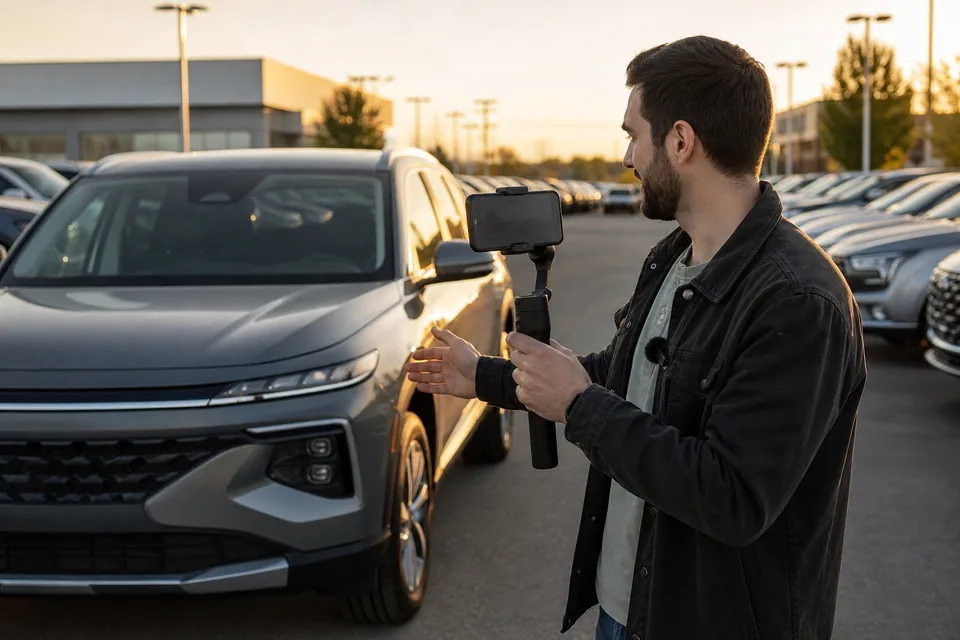
A real walkaround by someone your buyers already watch
The car videos that bring people to a lot are walkarounds, test drives and honest ownership reviews filmed by a creator whose viewers live nearby. Brief for the drive and the experience at your store, keep payment numbers out of the script, and a local creator with 18,000 engaged followers will book more test drives than a national channel ten times the size.
You approve every creator you hire
FTC #ad disclosure in every brief
Why it works
What makes automotive influencer marketing different
A payment figure turns a post into a credit ad
Under Regulation Z, stating a monthly payment, a down payment, a loan term or a finance charge triggers full disclosure of the down payment, the repayment terms and the APR. Lease payments trigger a similar list under Regulation M. Keep numbers out of the creator script unless you supply the full approved wording.
Your sales area is the real audience filter
A dealership sells to people within driving distance. Ask each creator for their audience location by city or state and shortlist the ones whose viewers can reach your lot. National reach is mostly waste for a store and only pays for an automaker or a parts brand that ships everywhere.
A loaner car is a material connection
Lending a creator a vehicle for a week, paying for a road trip or covering an event ticket is compensation under the FTC Endorsement Guides, just like cash. The creator must disclose it clearly in the video and the caption, and the dealership is expected to make sure they do.
What it handles
Matched, verified and shortlisted in seconds
Describe your brand and niche, and the AI scans creators in the 1k to 100k band, checks each one for fake followers and real engagement, and ranks the strongest matches into a shortlist you brief, approve and pay, all in one place.
- Ranks US creators on niche fit and verified engagement, so car accounts with bought followers drop off the shortlist
- Finds local car reviewers, detailers, off-road builders, EV owners and track day creators in the 1k to 100k band
- Keeps the approved vehicle claims, the finance wording rules, content approval and every payment in one place
- Writes FTC disclosure into every brief by default, including loaner vehicles, events and service credits
- Gives each creator a unique link or code so test drive bookings, leads and parts orders are counted per creator
Why MicroInfluencers
One marketplace that runs the whole campaign
Not a static creator database, not a managed agency with a markup, and not a DM spreadsheet. Match, vet, brief, track and pay in one place, tuned to the brand and audience you already sell to.
Matches every brief in seconds
Describe your brand, niche and platforms, and the AI returns a ranked shortlist of micro and nano creators in the 1k to 100k band, scored on audience fit and real engagement, so you skip days of hashtag scrolling and cold DMs.
Verifies every creator
Every creator is fake-follower-checked and engagement-verified before they reach your shortlist, with an Authentic badge and a real engagement rate on every card, so you never pay a bot to talk to bots.
Briefs, tracks and pays
Approve the creators you want and the platform handles the rest, with FTC #ad disclosure built into every brief, performance tracked per post, and payment released to the creator from the same dashboard. You approve every hire.
Honest comparison
What a car creator says about price, and the disclosure it triggers
The words in the first column are the ones creators reach for at the end of a dealership video. Each one changes what the post legally has to include. Rules quoted from the Code of Federal Regulations and the FTC, checked at source in October 2026.
| What the creator says | What it counts as | What the same post must then include | Rule |
|---|---|---|---|
| "Thanks to the dealership for the loaner" or any free car, trip, fee or event ticket | A material connection between the creator and the seller | A clear disclosure of the relationship in the video and caption, plus the platform's paid partnership label | FTC Endorsement Guides, 16 CFR Part 255 |
| "Drive it home for $389 a month" on a purchase | A triggering term in a credit ad: the amount of a payment | The down payment, the repayment terms over the full loan, and the annual percentage rate using that term | Regulation Z, 12 CFR 1026.24(d) |
| "Only $2,000 down" or "72 months" | Triggering terms: the down payment amount, the number of payments or repayment period | The same full set of credit disclosures as above | Regulation Z, 12 CFR 1026.24(d) |
| "2.9% financing" | A stated rate of finance charge | The rate stated as an annual percentage rate, using that term, and whether it can increase | Regulation Z, 12 CFR 1026.24(c) |
| "Lease it for $299 a month" or "$0 due at signing" | A triggering term in a lease ad: the amount of a payment, or a statement about payment due at signing | That it is a lease, the total due at signing, the number, amounts and due dates of payments, whether a security deposit is required, and that an extra charge may apply at lease end | Regulation M, 12 CFR 1013.7(d) |
| "Leave us a five-star review and get a free oil change" | An incentive conditioned on a positive review | Nothing makes it compliant. Offer any incentive for an honest review regardless of sentiment, or none at all | FTC Consumer Reviews and Testimonials Rule, 16 CFR Part 465 |
| A brief on MicroInfluencers | Your approved vehicle claims and finance wording, written into the brief | FTC disclosure by default, and every video approved by you before it is posted | $49, $149 or $399 a month published, plus each creator's agreed fee |
Sources: 12 CFR 1026.24 and 12 CFR 1013.7 as published by the Legal Information Institute at Cornell, the FTC Endorsement Guides and the FTC Trade Regulation Rule on the Use of Consumer Reviews and Testimonials (in effect since October 2024), read October 2026. The FTC's separate CARS Rule for auto dealers was vacated by the Fifth Circuit on 27 January 2025, so it does not currently apply, but state advertising and dealer laws do. This table is a working guide for briefing creators, not legal advice; have counsel review any post that mentions financing. If you also want to run the creator's video as an ad from their handle, read our page on influencer whitelisting.
The playbook
How to run a car dealership influencer campaign that books test drives
Six steps, in order. A first round with four to eight local creators over one month is enough to learn which audiences actually show up at the store.
Start from your sales area, not from the car
Draw the radius your buyers actually come from, usually the metro area plus the towns that already buy from you. Shortlist creators whose audience lives there and ask each one for their audience by city or state from Instagram Insights, TikTok Analytics or YouTube Studio before you talk fees.
Pick creators by the buyer, not by the badge
Truck and off-road creators for pickups, family and parenting creators for minivans and three-row SUVs, EV owners for electric models, detailers and enthusiasts for used performance cars. For aftermarket parts, builders who already install and review parts on their own vehicles convert far better than lifestyle accounts.
Write the finance rule into the brief
Tell creators plainly not to mention a monthly payment, a down payment, a loan or lease term or a rate unless you supply the full approved disclosure to read and show on screen. Let them talk about the drive, the features, the trade-in experience and the people at your store instead.
Check manufacturer and co-op rules first
Franchise dealers often run content through manufacturer advertising guidelines, and co-op funds usually come with approval requirements. Confirm before filming whether creator content qualifies and what the brand needs to see, so a good video does not get pulled after it is live.
Disclose every loaner, trip and fee
A week with a demo car, a paid road trip or an event invite is compensation. The creator uses the platform's paid partnership label and says it out loud early in the video. The brand is responsible for checking, so put the requirement and a review step in the contract.
Track to a test drive, a lead or an order
Give each creator a unique link to a test drive booking page, a model landing page or a parts storefront, plus a code the sales team can log when someone mentions the video. Compare cost per lead by creator after 30 days and rehire the ones whose viewers actually came in.
The most expensive mistake in automotive influencer marketing is a great video that quotes a monthly payment with no disclosures. Brief the finance rule first, then the creative.
People also ask
What dealerships and auto brands ask before hiring car influencers
Do car dealerships use influencers?
Yes. US dealerships pay local creators to film walkarounds, test drives, delivery days and service visits, usually for a flat fee or a loaner vehicle. The ones that get results pick creators whose audience lives within driving distance, keep finance numbers out of the script and track each creator to test drive bookings or leads.
How much do car influencers charge?
Car creators price like other creators of the same size, so US micro creators commonly quote from about $100 to $2,500 per post or short video, and YouTube reviews cost more because of production time. Many local creators accept a loaner vehicle plus a fee. On MicroInfluencers the software is $49, $149 or $399 a month, plus each creator's agreed fee.
Can an influencer mention a monthly payment for a car?
Only with the full disclosures. Under Regulation Z, a post that states the amount of a payment, a down payment, the number of payments or a finance charge must also state the down payment, the repayment terms and the APR. Lease payments trigger a similar list under Regulation M. The safe brief keeps payment figures out of creator content entirely.
Do car influencers have to disclose a free car or loaner?
Yes. Under the FTC Endorsement Guides a free vehicle, a loaner, a paid trip, an event ticket or a service credit is a material connection, just like a fee. The creator must disclose it clearly in the video and caption using plain words such as paid partnership, and the dealership should require and check that in the contract.
How do I find automotive influencers near me?
Search by the buyer and the area rather than by the word car: truck reviewers in your state, EV owners in your metro, detailers and enthusiast clubs nearby. Ask each creator for audience location before you sign. MicroInfluencers returns a ranked, engagement-verified shortlist of US creators from a description of your vehicle, buyer and market.
Is influencer marketing good for car dealerships?
It works when the creator's audience can actually visit the store. Local creators with engaged followers in your sales area can book test drives at a lower cost per lead than broad social ads, and their videos keep working on YouTube for months. National creators rarely pay off for a single dealership, though they suit automakers and parts brands.
What kind of content do car influencers make?
The formats that sell are walkarounds, first drives, honest ownership reviews, delivery day videos, road trips, before and after detailing, and install videos for aftermarket parts. Short clips on TikTok and Instagram drive awareness, while longer YouTube reviews are where buyers do their research, so most dealer programs use both.
Does the FTC CARS Rule apply to dealer influencer posts?
No, not currently. The Fifth Circuit vacated the FTC's CARS Rule on 27 January 2025, so it is not in force. Dealer influencer posts are still covered by the FTC Endorsement Guides, the Consumer Reviews and Testimonials Rule, Regulation Z and Regulation M for any finance or lease terms, and state advertising and dealer laws.
Good questions
Questions about car dealerships and auto brands
Explore more
More ways brands find and hire micro-influencers
YouTube influencer marketing
Match your brand to engagement-verified YouTube micro-creators, agree rates, brief, track and pay in one place.
Learn moreInfluencer contract template
The clauses every brand-creator agreement needs, plus how MicroInfluencers builds FTC disclosure into every brief.
Learn moreInfluencer whitelisting
Run paid ads from a creator's own handle: the current Meta and TikTok permission flows, what creators charge, and the contract wording that avoids a fight.
Learn moreStop scrolling hashtags and cold-DMing creators. Put matching on autopilot.
Describe your brand and audience and the AI returns a ranked shortlist of verified micro-influencers in seconds. You approve the creators you want, then brief, track and pay them in one place, with FTC #ad disclosure built into every brief.
Engagement-verified creators · no fake followers · FTC disclosure in every brief